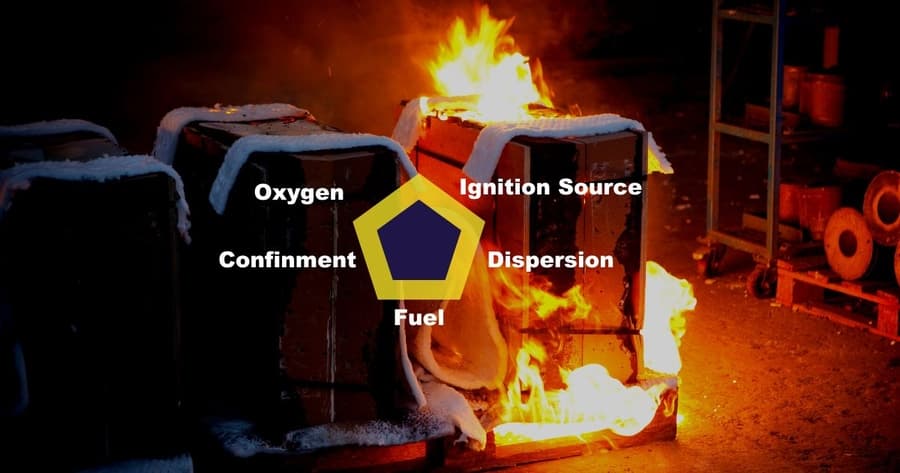
Industrial safety experts are drawing attention to the Dust Explosion Pentagon, a critical framework for preventing devastating workplace incidents. This model outlines the five elements required for a dust explosion: fuel (dust cloud), oxygen, an ignition source, dust particle dispersion, and confinement. Understanding and mitigating these factors is essential for industries aiming to bolster their safety measures.
Combustible dust, which can originate from materials like wood, metal, or plastic, acts as the fuel when suspended in air. Oxygen, readily available in most work environments, supports combustion. An ignition source, such as a spark or flame, initiates the reaction, while the dispersion of dust particles increases the mixture's volatility. Confinement then allows pressure to build, leading to an explosion. Experts assert that removing any one of these elements can drastically reduce explosion risks, though comprehensive safety strategies are necessary to address all potential hazards.
Industries at high risk, including wood processing, metalworking, and food production, are urged to adopt stringent dust control and ventilation practices. Regular equipment maintenance and the use of explosion-proof devices are also recommended. Employee training on hazard recognition and the importance of confined space safety are highlighted as key components of a robust safety protocol.
Further preventative measures include conducting risk assessments to identify dust accumulation areas, implementing cleaning schedules, and installing spark detection systems. The connection between dust explosions and confined spaces underscores the need for specialized rescue services in certain industries.
As industries evolve, the Dust Explosion Pentagon remains a vital tool for understanding and preventing dust explosions. By focusing on these five elements, companies can enhance workplace safety and avoid the severe consequences of such incidents. For additional insights, resources like The Dust Explosion Pentagon and Confined Spaces offer valuable information on safety strategies and preventative measures.