

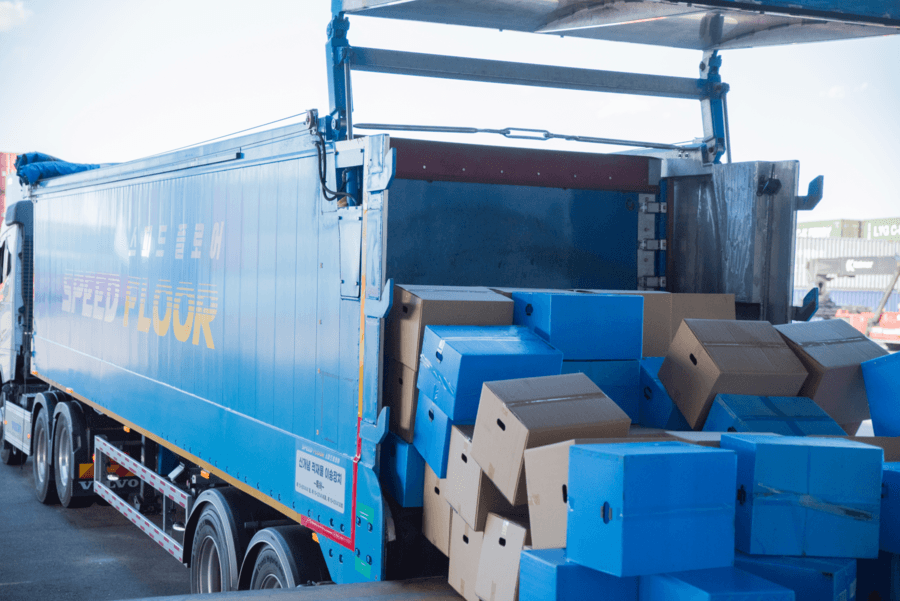
The U.S. freight transport industry faces significant challenges, including a declining workforce and the physically demanding nature of the job, which have led to a shortage of new entrants into the field. South Korea's SpeedFloor Co., Ltd. has introduced a groundbreaking solution to these issues with its SpeedFloor technology, a conveyor system designed for truck cargo areas. This system promises to transform logistics operations by minimizing physical labor and boosting efficiency.
The SpeedFloor system enables drivers to load and unload goods with the simple push of a button, eliminating the need to enter cramped cargo spaces. This innovation not only reduces physical labor by over 30% but also speeds up the loading and unloading process by more than 60%. Additionally, it significantly decreases the risk of injuries related to manual freight handling, thereby improving workplace safety.
Industry experts highlight the dual benefits of SpeedFloor's technology: addressing safety concerns for an aging workforce and mitigating the labor shortage. By automating essential processes, the system makes freight operations more accessible to workers across all age groups, potentially easing the industry's recruitment difficulties.
Beyond labor and safety improvements, SpeedFloor's technology supports sustainability efforts within the industry. The system's energy-efficient design allows logistics providers to enhance their profitability while adopting more sustainable practices, offering advantages for both their financial performance and the environment.
As the freight transport industry evolves, technologies like SpeedFloor are expected to be instrumental in its future development. By tackling immediate challenges and promoting efficiency, safety, and sustainability, such innovations could redefine logistics operations. For businesses in the sector, embracing these solutions may be crucial for maintaining competitiveness in a demanding market.
The timing of SpeedFloor's introduction is pivotal for the U.S. freight transport industry, which is currently grappling with labor shortages and safety issues. This technology presents a viable solution that could rejuvenate the sector by making jobs more appealing and safer for workers. As the industry seeks to attract new talent and keep existing employees, innovations that lessen physical demands and enhance safety are becoming increasingly important.
While the full impact of SpeedFloor's technology is yet to be determined, its potential to revolutionize the freight transport industry is evident. By solving critical operational challenges, this innovation could safeguard the future of a vital component of the U.S. economy. As the industry adjusts to evolving labor trends and the need for greater efficiency, solutions like SpeedFloor may set new benchmarks for freight transport operations.