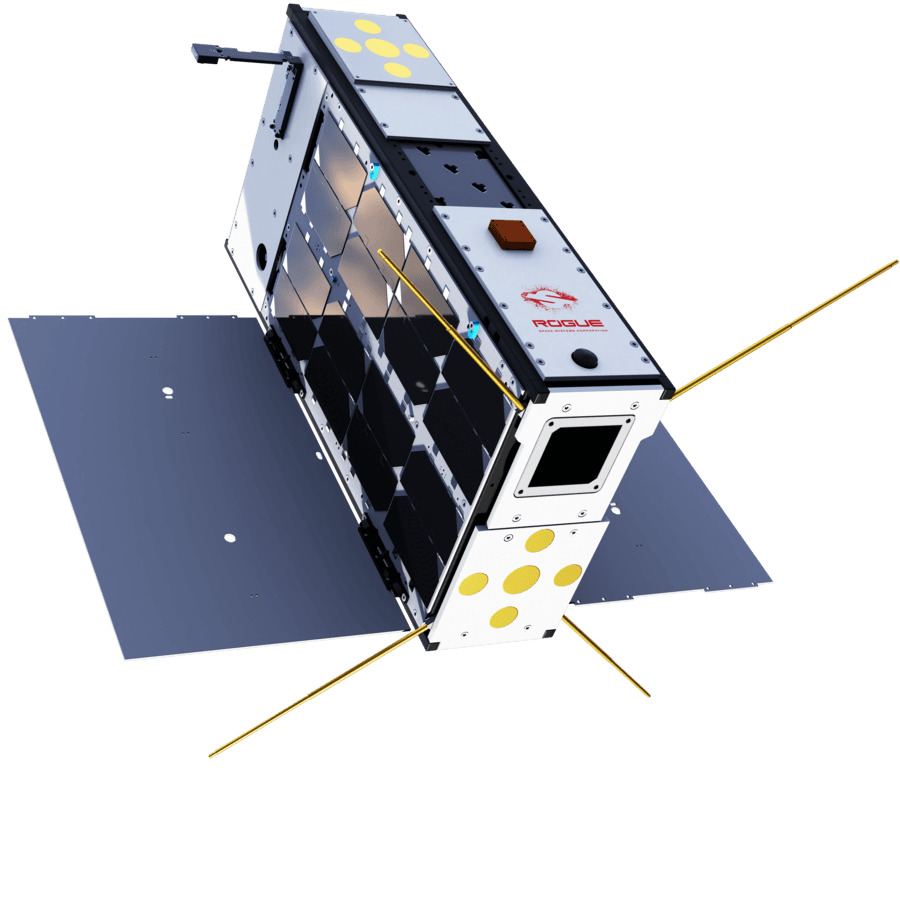
Rogue Space Systems Corporation has announced the full manifest for its OTP-2 mission, a pivotal step towards realizing advanced in-space logistics services and autonomous operations, with a launch scheduled no earlier than February 2025. The mission will test Rogue's developments in mission operations and algorithms essential for future In-Space Logistics services, including close-proximity maneuvering and docking, thereby advancing current space technology boundaries.
Central to the OTP-2 mission is the Scalable Compute Platform (SCP), Rogue's next-generation edge computing device designed for critical computer vision, autonomy, and AI computations. The SCP will facilitate the testing of the ASTRA autonomy system, aimed at autonomously managing spacecraft health and executing operational goals amidst competing priorities. Enhanced observational and navigational capabilities will be provided by five optical sensors and a star tracker, interfacing directly with the SCP for real-time processing and decision-making.
The mission also includes groundbreaking hosted payloads from industry partners, such as Forward Edge AI's Isidore Quantum® Space Encryptor, offering protocol-free quantum-resistant encryption in a compact form factor. This innovation addresses the pressing need for secure communications in the increasingly congested orbital environment. Additionally, IVO Limited's Quantum Drive, the world's first propellant-free pure electric propulsion system, will be tested, potentially revolutionizing spacecraft design by reducing mass and complexity.
Jon Beam, Rogue's CEO, highlighted the mission's significance, stating it propels the company towards its vision of providing in-space logistics services and establishing its credibility as a reliable in-space service provider. The OTP-2 mission is a cornerstone of Rogue's strategy to foster the industrialization of space through supportive logistics services, including the development of Waypoint™ stations, Orbots™ robotic workforce, and Orblock™ payload containers for efficient material transfer in space.
As the space industry evolves, missions like OTP-2 are critical for validating new technologies and operational concepts, paving the way for more efficient, autonomous, and capable spacecraft. The success of OTP-2 could significantly impact future space exploration, satellite servicing, and the development of space infrastructure, marking a milestone in the commercial space sector's rapid innovation.
For those interested in participating in future missions, Rogue Space Systems offers opportunities to fly payloads on the OTP-3 mission, planned for 2026, which promises advanced Rendezvous and Proximity Operations (RPO) capabilities, significant Delta-V, and a docking port for refueling operations. More information can be found at https://www.rogue.space.