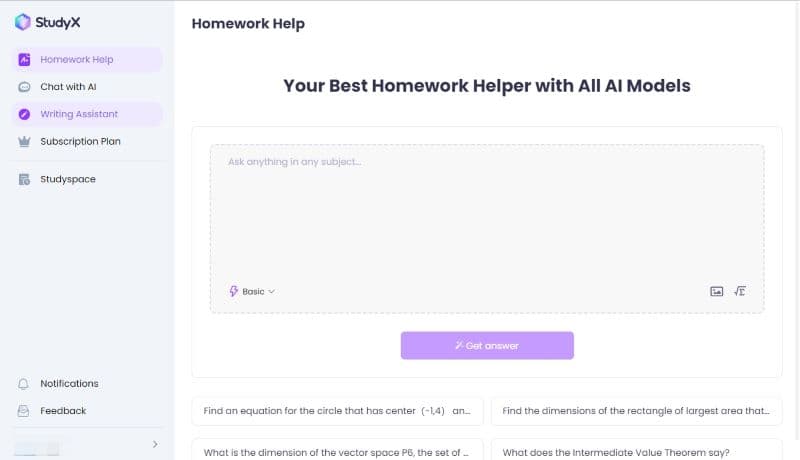
The education sector is witnessing a transformative shift with the introduction of StudyX, an AI-powered homework assistant that offers students from middle school to university level a comprehensive tool for academic support. This platform stands out for its ability to deliver quick and accurate answers across a wide range of subjects, boasting a 92% accuracy rate powered by six advanced AI models.
StudyX's innovative features include Homework Help, Chat with AI, and Writing Assistant, catering to diverse academic needs. The Homework Help feature, for instance, allows students to input questions or upload images of problems, receiving detailed step-by-step explanations. This is particularly beneficial for subjects like math, physics, and chemistry, as well as university-level courses in business and psychology.
The Writing Assistant feature provides extensive support for writing tasks, including essays and research papers, offering everything from generating complete pieces to editing and grammar-checking services. StudyX is also set to enhance its offerings with the introduction of Research Paper Help and four new modes designed to streamline information gathering from various sources.
Chat with AI serves as a personal tutor, enabling students to ask study-related questions and prepare for exams. This feature is invaluable for previewing material before class or reviewing complex concepts in subjects like geography and biology.
The advent of StudyX underscores the growing influence of AI in education, presenting both opportunities and challenges. While it promises to enhance learning efficiency, there's a need for guidance on its appropriate use to ensure it complements rather than replaces active learning. The platform's 24/7 availability and user-friendly interface make it a versatile tool for students, potentially reshaping homework and study approaches for more personalized learning experiences.
As AI-powered tools like StudyX become more prevalent, they may prompt changes in teaching methodologies and assessment practices. The potential for these tools to democratize access to high-quality educational support is significant, yet it also raises concerns about educational equity and the digital divide. The evolution of StudyX and similar platforms will be crucial in determining their impact on student learning outcomes and their role in fostering genuine academic engagement.