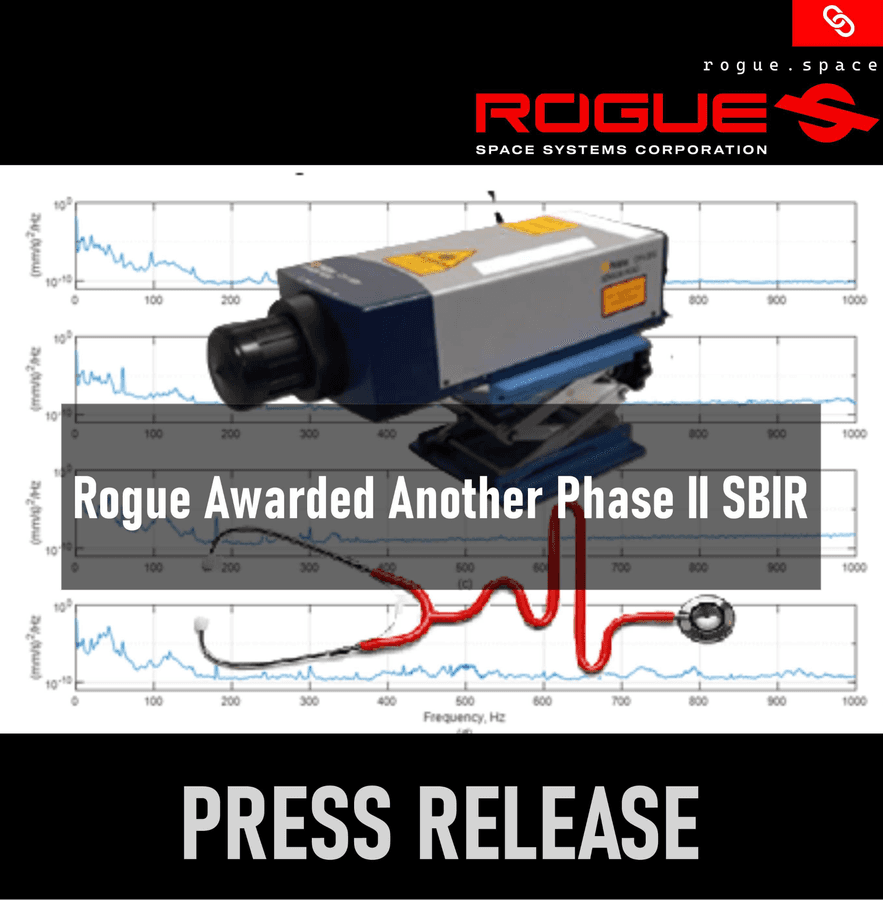
The recent awarding of a Small Business Innovation Research (SBIR) Phase II contract to Rogue Space Systems Corporation by SpaceWERX marks a pivotal moment in space technology development. The contract, valued at over $1 million, is set to propel the advancement of the Contactless LAser Satellite Stethoscope (CLASS), a groundbreaking technology aimed at improving the characterization of Resident-Space-Objects (RSOs). This development is crucial for enhancing space situational awareness and safety.
CLASS technology utilizes a laser vibrometer to perform contactless diagnostics on spacecraft, measuring electronic vibrations through acoustical signatures. This method not only facilitates the identification and classification of satellites but also enables the detection of potential anomalies. Jon Beam, CEO of Rogue Space Systems, highlighted the technology's potential to revolutionize space traffic management and satellite servicing by allowing remote detection and characterization of space objects.
Brook Leonard, Chief Operating Officer of Rogue Space Systems, pointed out that CLASS technology significantly enhances domain situational awareness by providing insights into the operational states of space objects. This advancement is expected to have a profound impact on global space initiatives, contributing to safer and more efficient space operations.
The integration of CLASS into Rogue's envisioned fleet of Orbots™ represents a critical step towards achieving in-space logistics services with advanced perceptual and autonomy systems. The success of this project underscores the importance of the SBIR and STTR programs in fostering innovation within the space industry, as noted by the streamlined process from proposal to award facilitated by the Air Force Research Laboratory and AFWERX.
With the increasing number of satellites and space debris, the need for accurate identification and characterization of space objects has never been more critical. CLASS technology offers a non-invasive solution that could reduce collision risks and improve space environment management. Its potential for enabling efficient and cost-effective satellite servicing missions further highlights its significance in the evolving space sector.
The support from SpaceWERX through this SBIR award reflects the U.S. government's commitment to advancing space-related technologies. It also emphasizes the role of small businesses and startups in driving technological innovations, strengthening the U.S. defense industrial base, and transitioning cutting-edge technologies into operational capabilities.
As Rogue Space Systems progresses with the development of CLASS technology, its implications for space operations, satellite servicing, and space traffic management are eagerly anticipated. This project could herald a new era in our ability to monitor and safeguard the increasingly congested orbital environment, marking a significant milestone in space technology.