

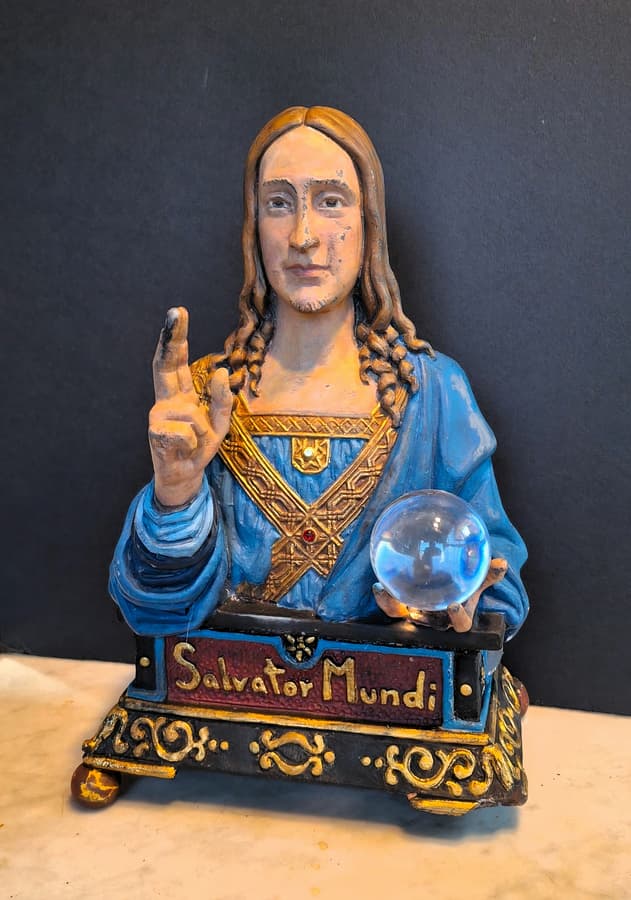
The art world is abuzz with the discovery of a mechanical bank that bears a striking resemblance to Leonardo Da Vinci's iconic Salvator Mundi painting, found at the Antique Trade Days Arts and Craft Fair in Ponchatoula, Louisiana. Beatrice Collins, a collector from Baton Rouge, uncovered the item, which features a figure of Jesus with a movable arm that performs a blessing motion when a lever is pressed. This find has led to speculation that it might be an early invention by Da Vinci himself, given its resemblance to the Salvator Mundi, a painting that sold for $450 million in 2017, setting a record as the most expensive artwork ever sold.
The mechanical bank, estimated to date back to the late 19th or early 20th century, was recognized by Collins' sister, Alice, an art history enthusiast, who noted its potential significance. The discovery has prompted a wave of interest among art experts and collectors, eager to uncover the bank's origins and its possible link to Da Vinci's work. Collins and her sister are set to travel to New York City to consult with experts in hopes of learning more about the bank's history and value. While Collins has not disclosed the purchase price, she mentioned it was significantly less than the $1,100 paid for the Salvator Mundi before its true worth was realized.
This discovery not only highlights the enduring fascination with Leonardo Da Vinci's work but also underscores the potential for significant art historical finds in unexpected places. For more information on the Salvator Mundi painting, visit Christie's feature on the Salvator Mundi. The story of the mechanical bank serves as a reminder of the mysteries that still surround the Renaissance master's oeuvre and the excitement that new discoveries can bring to the art world.