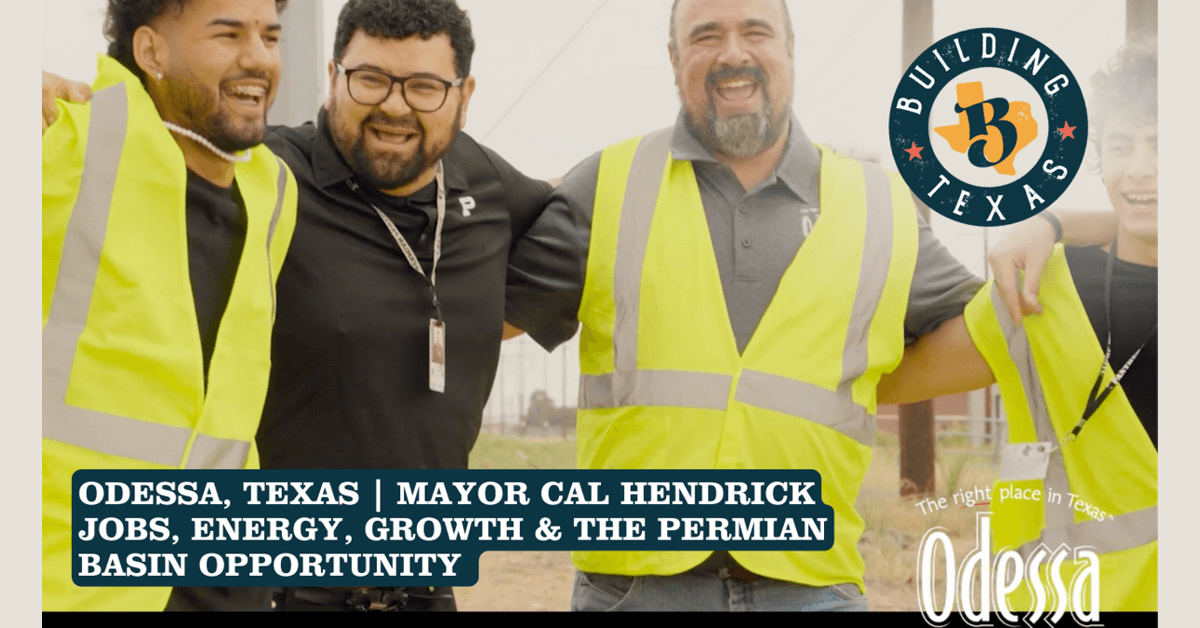
In a recent interview on The Building Texas Show, Odessa Mayor Cal Hendrick detailed the economic evolution of the Permian Basin, emphasizing that while oil and gas remain foundational, the region's future hinges on strategic diversification and workforce development. Hendrick stated that Odessa is "underemployed, not overbuilt," highlighting sustained demand for skilled labor and entrepreneurial ventures as key drivers of opportunity. The conversation focused on how educational institutions and training programs are creating pathways into high-demand careers such as welding, HVAC, plumbing, electrical work, and trucking. This workforce development is central to supporting not only traditional energy sectors but also emerging areas like energy efficiency, alternative power sources, and healthcare expansion.
The region's appeal to investors and innovators is bolstered by access to energy resources, land, infrastructure, and a business-friendly regulatory environment. Hendrick and host Justin McKenzie addressed the challenges accompanying rapid growth, including strain on water systems, roads, public safety, and healthcare infrastructure. The mayor outlined Odessa's approach to long-term planning through master planning initiatives, fiscal responsibility, and regional collaboration with neighboring communities like Midland. This coordinated effort aims to ensure sustainable development over the next fifty years. McKenzie noted that improved connectivity, capital access, and workforce demand are transforming the Permian Basin into a "national brand for opportunity," reducing its historical geographic isolation. The full interview is available for viewing on YouTube as part of The Building Texas Show's series spotlighting Texas cities through conversations with civic leaders.
The discussion underscores a broader regional shift where economic resilience is being built through diversification rather than reliance on a single industry. By investing in education, infrastructure, and collaborative governance, Odessa is positioning itself to attract both talent and investment beyond the cyclical energy market, aiming to sustain its reputation as one of Texas's most opportunity-rich regions. The mayor's emphasis on workforce development addresses critical gaps in skilled labor while creating economic stability that can withstand fluctuations in the energy sector. This strategic approach recognizes that long-term prosperity requires building multiple economic pillars rather than depending solely on traditional industries that are subject to market volatility.
Regional collaboration with communities like Midland represents a significant departure from isolated municipal planning, creating economies of scale for infrastructure development and service delivery. The focus on sustainable development acknowledges both the environmental and economic challenges of rapid growth in the Permian Basin. As the region transforms into a national destination for opportunity, the success of these diversification efforts will have implications for similar resource-dependent economies across the country seeking to build more resilient economic foundations. The interview provides insight into how civic leadership is navigating the complex balance between honoring traditional industries while actively cultivating new economic opportunities for future generations.