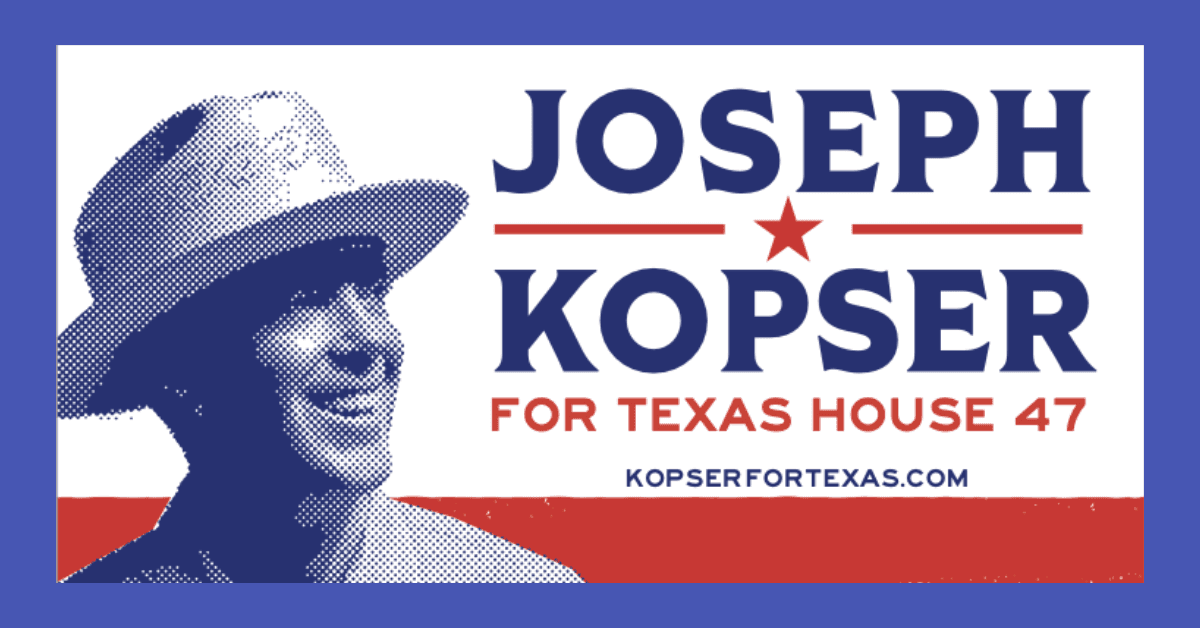
Joseph Kopser's campaign for Texas House District 47 reported raising more than $53,000 in the first three weeks following his official entry into the race, according to campaign finance filings from January 15. The fundraising total, achieved during a period that included the holiday season when political contributions typically decline, signals early momentum for Kopser as he seeks the Democratic nomination. The campaign's ability to raise significant funds quickly, particularly during a traditionally slow fundraising period, demonstrates organizational strength and suggests potential competitive viability.
The campaign stated that the funds came from a broad network of donors across sectors including clean energy, transportation, education, urban planning, and technology, as well as longtime supporters from Kopser's previous civic and entrepreneurial work. This diverse backing suggests a coalition forming around his candidacy in the open-seat race. "Despite only officially starting our campaign on December 9, we outraised our Democratic opponent by 35% over the same period of time," Kopser said. He emphasized that his campaign is focused on four key priorities: standing up for healthcare, taking on rising costs, broadening the coalition, and avoiding distractions to remain focused on issues important to Texas families.
House District 47 is currently an open seat, with early voting scheduled to begin on February 17 and Election Day on March 3. In this heavily gerrymandered district, the winner of the Democratic primary is expected to become the next State Representative, as no runoff is anticipated. The strong early fundraising performance positions Kopser's campaign with resources to communicate its message and engage voters during the critical weeks leading up to the primary. This financial head start could prove crucial in a primary election where voter outreach and visibility often determine outcomes.
The race represents an opportunity for Democrats to secure representation in a district that has been shaped by gerrymandering practices. "If we're going to fight back—and fight smarter—we have to be serious about communicating and engaging with voters," Kopser added. The campaign's early success in building a financial foundation from a wide array of supporters indicates a strategic approach to a contest where resources are essential for effective voter communication in the condensed primary timeline.