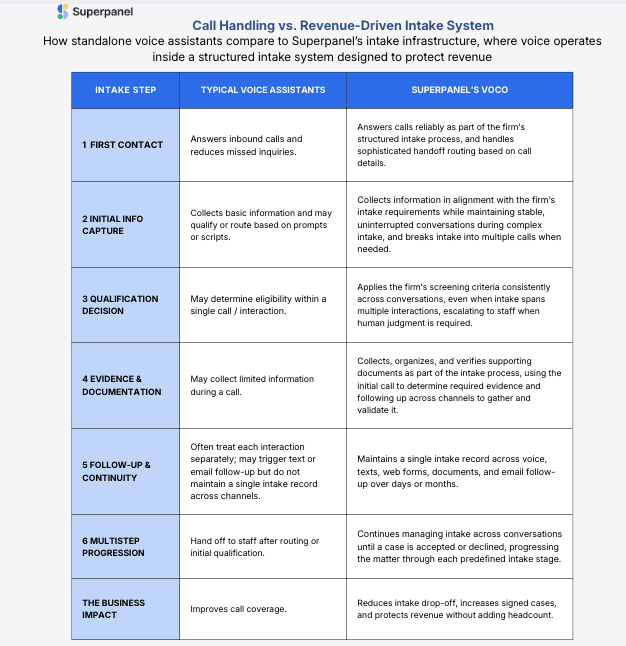
Superpanel announced the launch of Voco, its native voice execution layer for complex legal intake. The technology addresses what the company identifies as the largest hidden loss center in plaintiff law firms: the intake process itself. Superpanel, which serves as intake infrastructure for high-volume operations in regulated environments, reported that it has evaluated nearly 250,000 cases and signed over 15,000 cases for plaintiff law firms in the past year.
The Voco system is designed to manage intake from first contact through case qualification and handoff. A key feature is that callers are always given the option to speak with a human staff member, yet data shows fewer than 4 percent choose to do so. This suggests a high level of user acceptance for the automated system. The company states that by owning intake execution end-to-end, it helps firms avoid the missed opportunities and inconsistency that can cost high-volume practices millions in lost cases annually.
Founded in 2024, Superpanel has processed almost 250,000 intake workflows across practice areas including lemon law, personal injury, employment law, and mass tort. In the past year, client organizations using the platform have collected, verified, and organized over 60,000 supporting documents. The company reports that firms can handle up to five times more inbound inquiries per intake staff member and have seen conversion rates increase by up to 300 percent within six months of full deployment, all without adding headcount. More information about the company is available at https://www.superpanel.io.
The implication of this launch is significant for the legal industry, particularly for plaintiff firms operating on volume. Inefficient intake processes can directly translate to lost revenue, as potential clients may disengage if the initial contact is cumbersome or inconsistent. Superpanel's data suggests that automating this front-line interaction, while preserving the option for human intervention, can dramatically improve efficiency and case acquisition rates. This technology could reshape how legal services, especially in high-volume practice areas, manage their first and most critical point of contact with potential clients.