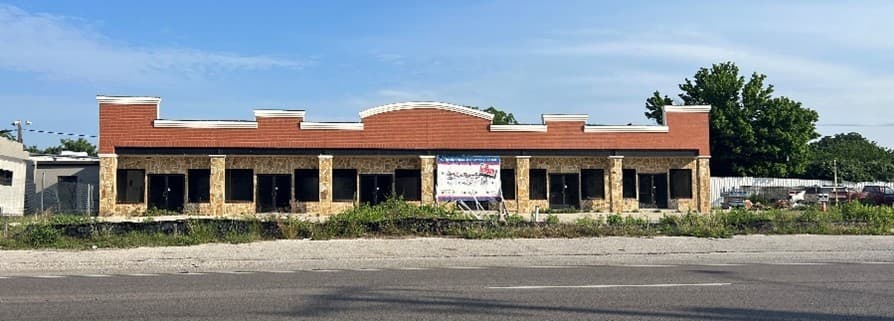
The Haltom United Business Alliance (HUBA) is calling for significant code and policy reforms to encourage urban renewal in Haltom City's older neighborhoods. With no public funds allocated for revitalization, HUBA believes that lowering regulatory barriers could make these areas more appealing to private investors and small businesses. The alliance has drawn on research and strategies from organizations like Strong Towns, which advocates for financial stability and livable neighborhoods through practical reforms.
One of the major obstacles identified by HUBA is the stringent building codes that apply to older structures. Joe Palmer, HUBA Communications Director, pointed to the example of a historic opera house in Georgia that closed due to prohibitive upgrade costs, a scenario he sees mirrored in Haltom City. Requirements such as sprinkler systems, additional parking, and other costly modifications often discourage investment in vacant buildings, leaving them unused for years.
Ron Sturgeon, a founding member of HUBA, shared his own challenges in opening a low-cost events center, which took over two years to approve and complete. Sturgeon's experience underscores the difficulty small businesses face in navigating the current regulatory environment, at a time when Haltom City's population is declining despite growth in the broader Dallas-Fort Worth metroplex.
HUBA proposes the creation of an overlay district covering key areas like Denton Highway and NE 28th Street, where code reforms would simplify property renovation and business openings. Palmer stressed the role of small businesses in urban revitalization and the need for Haltom City to become more competitive by easing the investment process. The alliance's broader goal is to make Haltom City the most small business-friendly city in Tarrant County, a vision that requires addressing zoning obstacles, rigid codes, and bureaucratic delays.
This initiative reflects a wider challenge for American cities: balancing regulation with the need for economic growth in aging neighborhoods. HUBA's approach, inspired by groups like Strong Towns, offers a potential model for revitalizing urban areas without public funding. The outcome of Haltom City's policy debate could serve as a valuable case study for other municipalities striving for sustainable development and economic vitality.